
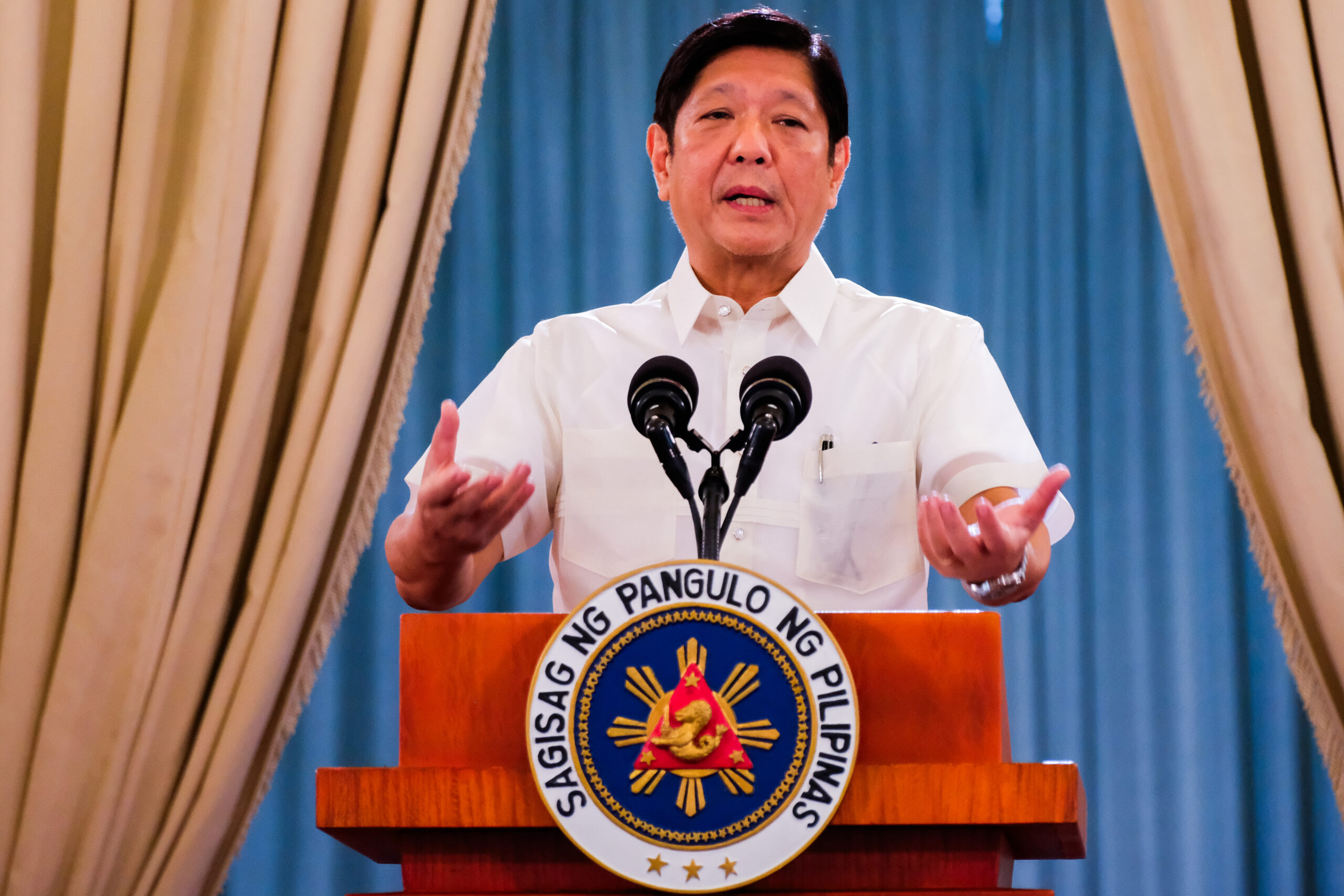
Amnesty International (AI) Philippines has again given President Ferdinand Marcos Jr. a “failed” mark, criticizing his administration’s approach to human rights and social justice ahead of his fifth State of the Nation Address (SONA).
AI highlighted three major concerns the President has yet to address: protecting human rights defenders, upholding press freedom, and advancing climate justice.
Other human rights and international experts also criticized the lack of a concrete human rights agenda in Marcos Jr.’s SONA, pointing to similar issues that should have been mentioned: Attacks on civil society, so-called “red-tagging” (accusation of being a member or supporter of the armed communist insurgency or “terrorist”), and rejoining the International Criminal Court.
Lawyer and international law lecturer, Romel Bagares, stressed that the current government needs to show the international community that Marcos Jr. is serious about its human rights obligations.
At least 165 activists and government critics have been arrested during Marcos Jr.’s term, averaging one arrest per week over the past four years, said the human rights alliance Karapatan in a statement.
As of July 27, 2026, the National Union of Journalists of the Philippines (NUJP) recorded 256 attacks on the press under the Marcos Jr. administration. Twelve journalists and media workers have been killed, with media groups noting a pattern of violence and intimidation.
Groups say justice is still elusive, as those behind the killings have not been prosecuted. Together with physical violence, journalists continue to face legal harassment through libel, cyber libel, and other charges—used as tools for retaliation and intimidation.
The government has launched efforts like the PNP Media Security Vanguards and signed agreements with agencies to protect media workers, but concerns remain about how effective these measures really are.
Controversial “Pax Silicia” initiative
Marcos Jr. announced the Pax Silica Industrial Hub during the SONA, which is part of the US-led Pax Silica Initiative, describing it as a new manufacturing and logistics center for the international tech industry. He said the project should create jobs, make the country more competitive, and help revive the economy.
However, Marcos Jr. did not address the project’s possible impact on climate justice. A key concern is water insecurity: the large data centers planned for the site will require huge amounts of water for cooling, putting local farmers’ and indigenous Aeta communities’ water supply at risk. Officials claim they will use alternative water sources and recycling, but many are not convinced this will prevent the industry’s needs from taking priority over those of the community.
While officials say they will implement alternative water sources and recycling measures, stakeholders are still doubtful that the industry’s needs will not outweigh those of the community.
Activists also warn that the hub could put unsustainable pressure on local electricity and water supplies, shifting environmental and social costs onto nearby communities.
Similar concerns have surfaced in other parts of the Philippines, as the project strives to tap the country’s nickel, copper, chromite, and cobalt for use in semiconductors and mineral processing. Residents have protested mining that threatens biodiversity and livelihoods, citing their right to a balanced environment.
House Representative Leila de Lima urged the administration to thoroughly study how Pax Silica might affect the country’s security, environment, public health, and Indigenous communities, stressing that these issues should not be neglected in the name of development.
De Lima also warned that as the president reconsiders nuclear energy, safeguards must protect both the environment and community health and safety.
Photo © AMP