
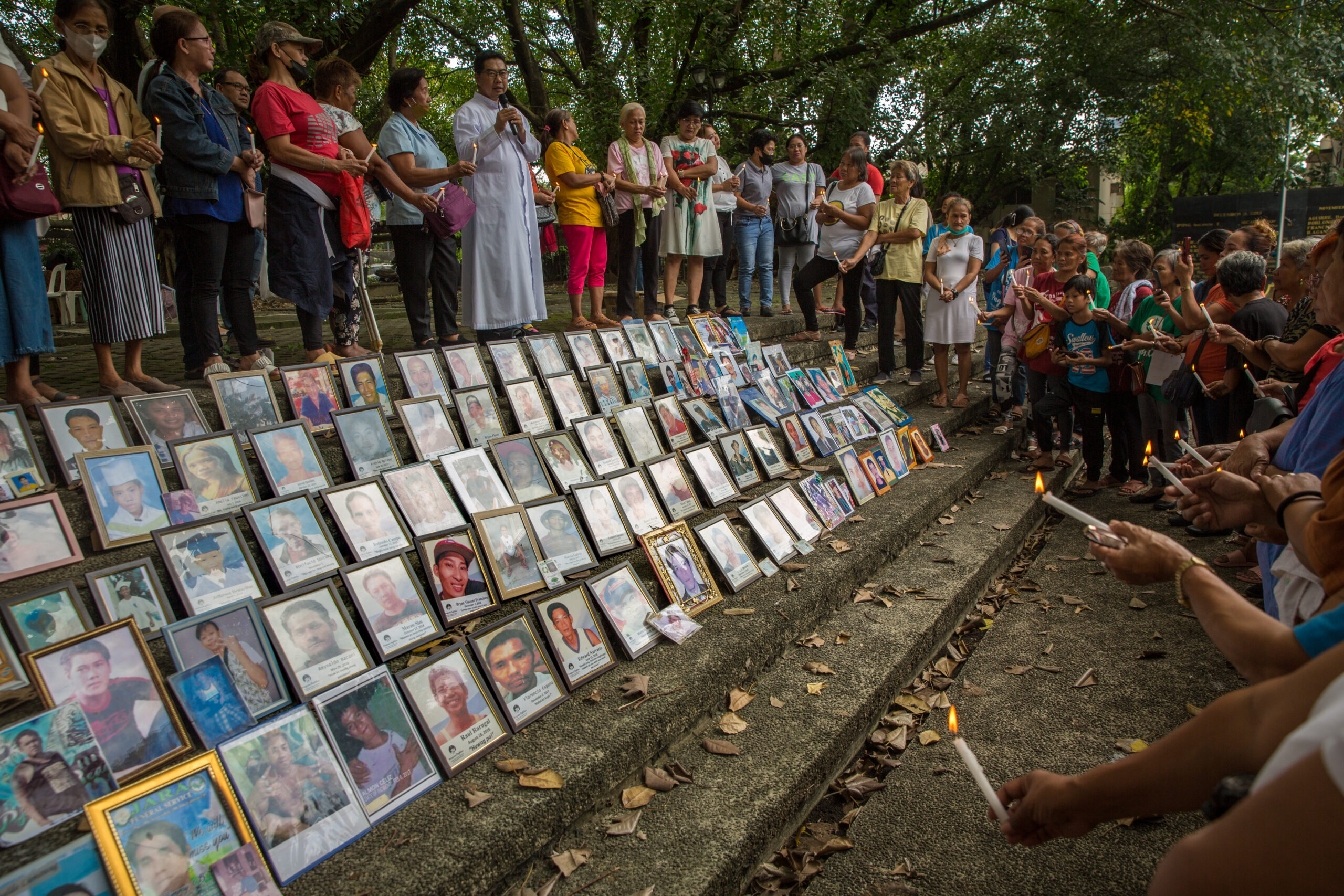
The Philippine Truth Commission, an independent body led by civil society groups, has begun building a comprehensive registry of victims killed during former President Rodrigo Duterte’s so-called “war on drugs.”
The initiative, which aims to harmonize conflicting figures on the death toll, comes as Duterte faces trial at the International Criminal Court (ICC) in The Hague for his alleged role in thousands of extrajudicial killings. On September 29, 2026, the Commission called on families of victims, as well as organizations, lawyers, journalists, and researchers, to contribute their records to the new registry.
Official police figures place the number of drug war deaths at around 6,000, but watchdog groups, both local and international, estimate as many as 30,000 people may have been killed between 2016 and 2022.
Bono Olgado, director of documentation, archives, and memorialization at the commission, said their group is looking for ways to build a shared platform that connects existing records while protecting the people and communities that maintain them. Instead of centralizing all information, the Commission wants to unite fragmented documentation to create a more accurate record of the drug war’s human impact.
The Commission holds public sessions to officially document survivors’ stories and supporting evidence. At its third public session on September 25, 2026, Clarita Alia, a 72-year-old vegetable vendor from Davao City, recounted how she lost her four sons to killings she believes were carried out by the so-called Davao Death Squad between 2001 and 2007.
Alia said her sons were killed after she refused to let police arrest her eldest son without a warrant. Richard, 18, died on July 17, 2001; Christopher, 16, three months later; Bobby, 14, on Nov. 3, 2002; and Fernando, 15, on April 13, 2007. She admitted that her sons had run-ins with the police, but being merely suspects, they should have been arrested and not killed.
After two decades, Human Rights Watch said the killings of Alia’s sons remain unprosecuted, and the perpetrators are still free.
The Truth Commission aims to determine what officials knew and what actions, if any, were taken to investigate these deaths. It also wants to understand why justice eluded grieving mothers like Alia and how to better protect fearful witnesses.
Testimonies of “repentant” police officers who were involved in the killing incidents are also welcome to the Truth Commission, said its chair Raul Pangalangan.
Pangalangan expressed hope that police officers who have since regretted their involvement might come forward, adding that the Commission wants to engage not only victims and their families but also officers and government personnel who participated in the drug war.
The Philippine National Police (PNP) responded with cautious support, saying it “welcomes any independent initiative that aims to deliver clarity and healing to our nation.”
Though her case is not included in the ICC’s probe into Duterte’s “war on drugs,” Alia hopes her testimony will inspire more bereaved families to break their silence.
Photo © Raffy Lerma