
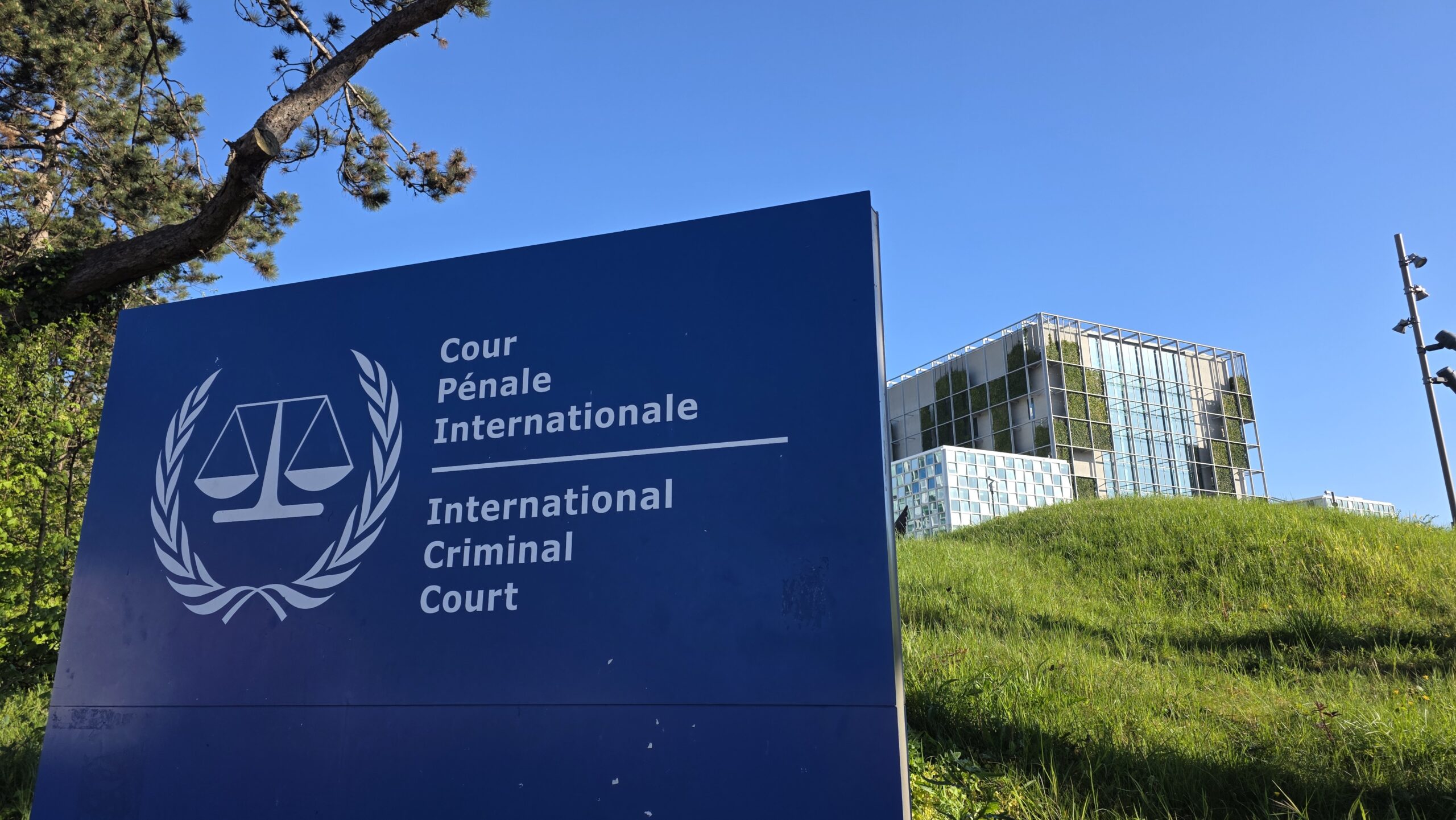
The Trial Chamber III of the International Criminal Court (ICC) denied a request from former Philippine President Rodrigo Duterte’s lawyers to amend the court’s electronic evidence management system, or “E-Court Protocol.” The requested system would have required an expert review of all open-source or user-generated evidence before his upcoming trial.
Rodrigo Duterte faces three counts of alleged crimes against humanity, involving at least 76 incidents of murder and attempted murder, before the ICC in connection to his so-called “war on drugs,” that led to at least 27,000 extrajudicial killings.
Duterte’s defense team contended that the thousands of items disclosed by the prosecution could overwhelm the case record with potentially unreliable or irrelevant material. However, the ICC Trial Chamber III decided that imposing additional review requirements would cause unwarranted delays and conflict with established procedures for handling evidentiary disputes.
Expert verification not needed
In its ruling from September 28, 2026, the Chamber concluded that requiring expert verification of the prosecution’s extensive evidence was unnecessary.
The Chamber instead agreed to the prosecution’s proposal to include a URL metadata field in the electronic evidence system to make it easier to trace the sources of online materials. The Registry* was instructed to provide the revised E-Court Protocol by October 2, 2026.
At the Third Status Conference on September 16, 2026, the Chamber reminded both parties not to submit too much evidence at once and asked the prosecution to prepare a shortlist of key evidence for the next session.
Duterte’s lawyers said it would take at least 16,000 hours to go through the documents. They requested that the prosecution start a new case file and cap the evidence for review at 10,000 items, with a deadline of October 7, 2026.
In a motion dated September 25, 2026, the defense stated that the prosecution had submitted 62,130 pieces of evidence, with over 320,000 pages of documents and roughly 1,000 audiovisual files.
The defense argued that handing over such a massive amount of material just three months before trial left Duterte with too little time to prepare.
The prosecution admitted that there were some duplication and administrative issues but called the defense’s concerns exaggerated.
International law professor Romel Bagares explained that presenting a lot of evidence doesn’t always mean prosecutors are overloading the court. In complicated cases like Duterte’s, prosecutors need to submit enough material to prove the charges and show how the accused was involved.
Bagares also noted that ICC rules require prosecutors to provide any evidence that could help the defense. Therefore, submitting more evidence than what will ultimately be used in court is not inappropriate.
Duterte is fit to stand trial
The ICC Trial Chamber III announced on October 8, 2026, that Duterte is fit to stand trial in his case on charges of crimes against humanity. This decision followed an extensive evaluation by an independent Panel of Experts, which unanimously concluded that Duterte can understand the accusations and the court’s proceedings.
Formal cognitive tests showed no significant memory loss and no solid evidence of severe cognitive impairment. The medical experts also found improvements in Duterte’s general health, attributing them to the high standard of medical and nursing care he has received while in custody.
The Chamber also adopted necessary measures to facilitate Duterte’s effective participation in the trial, scheduled to begin on November 30, 2026.
Request for refiling of charges rejected
On October 9, 2026, the Chamber rejected the motion of the defense council to order the prosecution to refile the charges against Duterte. In its decision, Chamber III stated it lacked authority to order a refiling of charges before the ICC Pre-Trial Chamber.
The Chamber also rejected the defense’s argument the charges were a “moving target” and the “current landscape of crimes in this case” was “virtually unlimited.” It stressed that safeguards were already in place, including the deadline of August 31 for prosecutors to “add new incidents information” and “file auxiliary pre-trial documents.”
The Chamber outlined that the Pre-Trial Chamber already clarified that the provision of an exhaustive list of every incident was not needed for prosecutors, but the charges could be framed “through illustrative examples of relevant incidents.”
The fourth ICC status conference on October 13, 2026, in the case against Duterte discussed the number of witnesses and body of evidence. The prosecution stressed it reduced the witness list to 173 from 193; not all witnesses are expected to testify.
* The Registry is a neutral office within the ICC, assisting all branches to keep the court running smoothly and upholding fair, open proceedings.
Photo © Emmalyn L. Kotte