
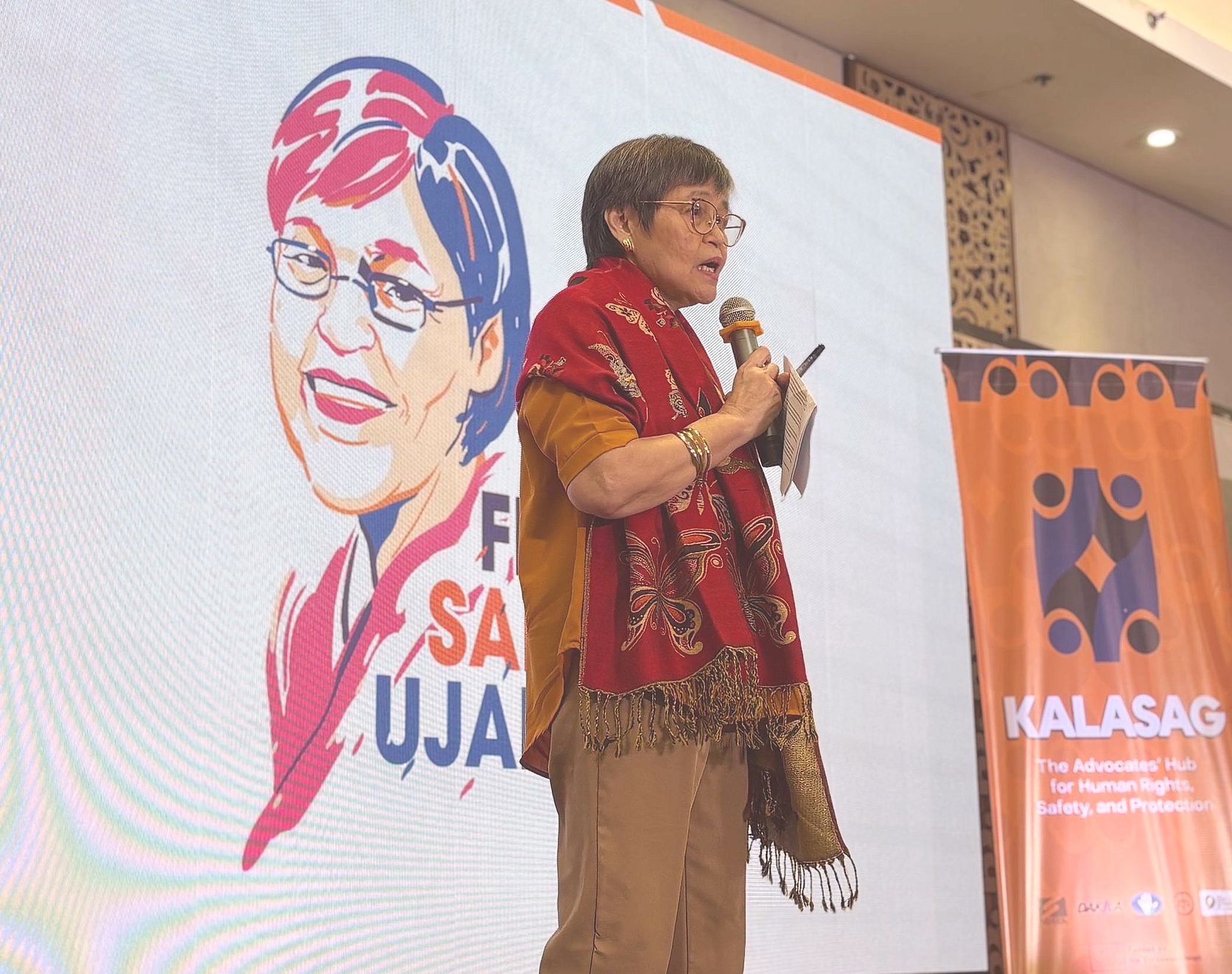
The Philippine Court of Appeals has acquitted Salome “Nanay Sally” Ujano, a prominent women’s and child rights advocate, releasing her after more than four years in detention on rebellion charges. The ruling from March 23, 2026, overturned a 2024 Taguig Regional Trial Court conviction that had sentenced her to 10 to 17 years in prison. The appellate court found that prosecutors failed to establish her guilt “beyond a reasonable doubt,” stating that the evidence fell short of “the required moral certainty” needed for a rebellion conviction, a ruling that critics of the case had long called for.
Ujano was arrested in November 2021 after the Philippine National Police served a 2006 warrant. She was accused of involvement in a 2005 military ambush in Quezon Province – allegations her family called baseless. At the time of the alleged crime, Ujano was serving as executive director of the Women’s Crisis Centre, where she promoted protections against domestic violence. She later became national coordinator of Philippines Against Child Trafficking, the role she held at the time of her arrest.
The Court of Appeals identified three fundamental failures in the case against Ujano.
The two key military witnesses – Sergeants Alex Ayupan and Clodualdo Casanova – claimed to have recognized Ujano during a firefight involving approximately 60 members of the rebellion group New People’s Army (NPA). Their identification came 17 years after the incident. The CA described this as “an extraordinary lapse,” dealing a major blow to the reliability of their testimony.
The identification procedure was found to be suggestive. Both witnesses admitted they recognized Ujano because her photo had been displayed in military camps as an alleged “most wanted” leader of the NPA prior to their testimony. The court warned that such prior exposure could cause a witness to associate a face in a photograph with a person seen during a stressful event – meaning what appeared to be a confident identification may have been nothing more than recognition of a photograph.
The witnesses also failed to file a prompt, sworn statement following the 2005 event, thereby skipping a basic and necessary step in the evidence gathering process.
Together, the court said, these failures rendered the identification of Ujano “highly questionable” and insufficient to prove guilt beyond a reasonable doubt.
Amnesty International Philippines welcomed the acquittal but called the case “a clear miscarriage of justice,” urging the government to pass the Human Rights Defenders Protection Act and to review the implementation of the Anti-Terrorism Act that has been widely used to criminalize human rights defenders.
The acquittal came just two days after the Philippines was added to the CIVICUS Monitor watchlist for rapidly eroding civic freedoms. The country already held a “Repressed” rating – the second lowest possible. CIVICUS Monitor Asia researcher Josef Benedict warned that the crackdown has “a chilling effect for many in the Philippines who seek to speak out and organize.”
Photo © PAHRA