
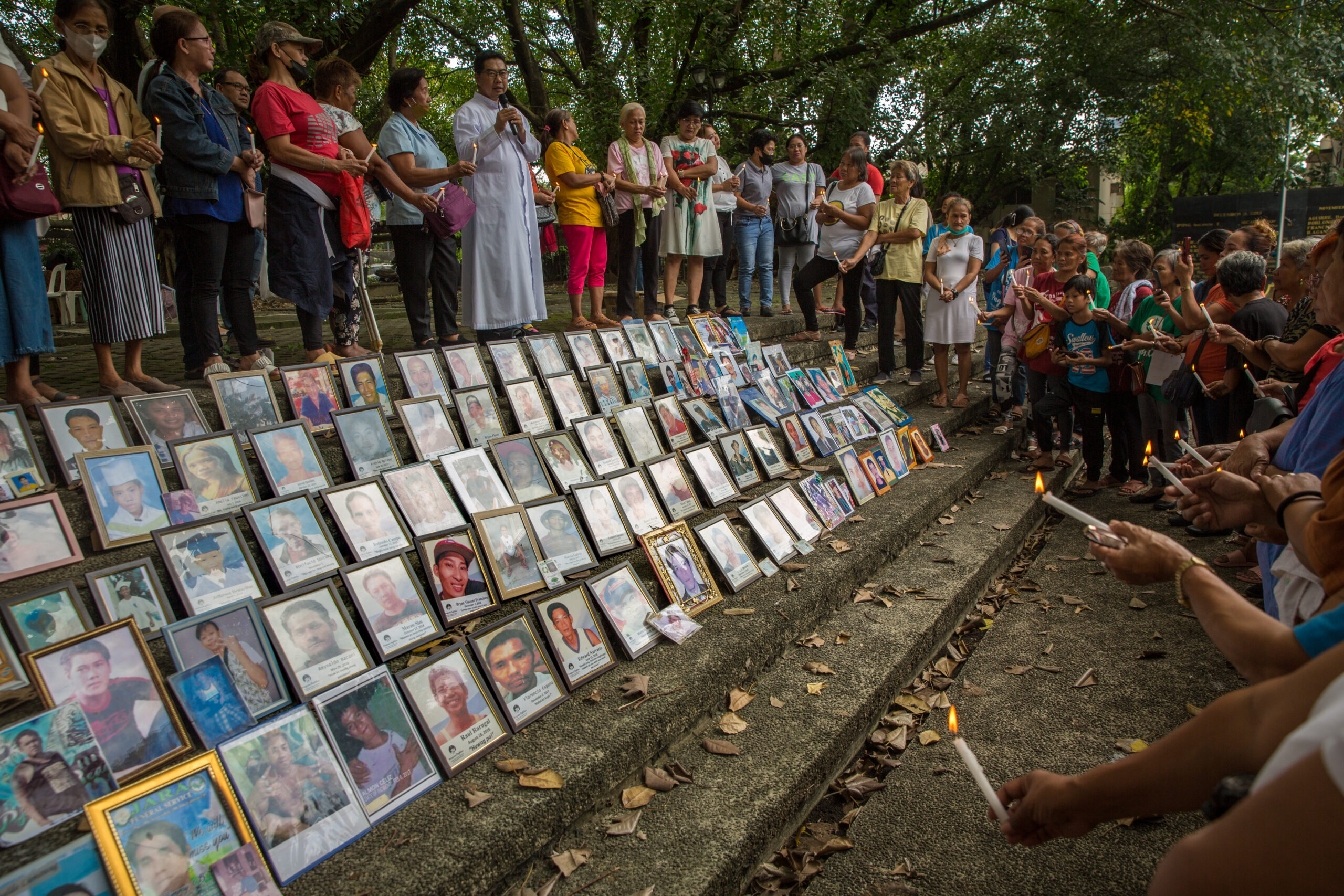
A coalition of civil society groups, academics, and faith leaders launched the Philippine Truth and Reconciliation Commission to investigate and document drug-related killings and abuses during the so-called “war on drugs” under former President Rodrigo Duterte.
The commission is civilian-led and independent from the Philippine government. Commission chair Raul Pangalangan, a former judge at the International Criminal Court (ICC), headed the initiative’s launching event in Manila on May 27, 2026.
The commission includes four other commissioners, who are experts in different fields relevant to the investigation:
- Forensic pathologist Dr. Raquel Barros del Rosario-Fortun (Commissioner for Forensic Sciences and Independent Investigation),
- Al Fuertes (Commissioner for Psychosocial Support and Trauma Healing),
- Daniel Franklin Pilario (Commissioner for Church and Education, Truth Literacy, and Institutional Reform), and
- Human rights journalist Carlos Conde (Commissioner for Public Documentation, Transparency, and Democratic Accountability).
Also present was the commission’s adviser Cardinal Pablo Virgilio “Ambo” David as well as human rights advocates, religious leaders, and members of civil society, such as Fr. Flaviano “Flavie” Villanueva.
The commission was set up nearly ten years after Rodrigo Duterte began his anti-drug campaign that led according to the Commission on Human Rights to at least 27,000 deaths in 2018. It aims to create a public record of survivor testimonies and institutional violence and fill gaps left by earlier government investigations.
“The Truth Commission was created to make sure that the stories of victims, survivors, and families are heard, verified, and preserved. This is not about replacing the courts or assigning guilt. It is about building a credible truth record that can guide accountability, healing, reform, and the prevention of future violence,” Pangalangan stated during the launch.
Public hearings and survivor-centered approach
Public truth hearings will be a key part of the commission’s work. These will allow survivors, families, witnesses, and experts to share their experiences in settings designed to secure safety and dignity. The hearings aim to document lived experiences, institutional patterns, historical background, and the wider social impacts of violence.
The commission’s findings will be compiled into periodic reports and recommendations for relevant agencies, including the Department of Justice, the National Bureau of Investigation, and the Commission on Human Rights. Subject to privacy protections, these reports will also be made available to the public and submitted to oversight bodies such as Philippine Congress and the President.
Families of extrajudicial killing (EJK) victims and advocacy groups have called for increased direct participation in the commission’s work. “We know how to speak the truth. We have been telling our stories for years. Consultations with the victims and their families must be integral in the process,” stated Jane Lee, wife of a drug war victim.
Advocacy groups, including Rise Up for Life and for Rights and Hustisya, have called for the representation of victims and their relatives on the commission panel, noting that only one woman, Dr. Fortun, was appointed as a commissioner.
Pangalangan said the commission’s records may aid both national and international investigations, including current cases at the ICC, where Duterte is being held on charges of crimes against humanity.
The Commissioners emphasized that their work is not intended to replace courts or the ICC but to create a comprehensive record that can encourage healing and reform. Dr. Fuertes explained that the primary aim is to uphold the dignity of drug war victims. He also stressed the importance of protecting the rights of accused individuals and all others affected by these proceedings.
Lawyer and ICC representative for the victims, Joel Ruiz Butuyan, welcomes the establishment of the truth commission. He argues that the commission can look into crimes beyond the ICC period of investigation, meaning before November 1, 2011, and after March 16, 2019. Notably Rodrigo Duterte started his “war on drugs” already during his term as then Davao City mayor and drug-related killings also persist during the current administration of President Ferdinand Marcos Jr.
Butuyan also stresses that the commission could investigate and prepare cases for litigation involving mid-level officers who gave the order to kill and those who pulled the trigger. Moreover, he emphasizes that the ICC prosecution is limited to crimes against humanity and of murder and frustrated murder. The commission, according to Butuyan, could also help victims of other crimes, such as disappearances, unlawful arrest, torture and sexual violence, to document their cases.
An advantage of the commission is also that it “cannot be accused of political bias unlike the Marcos administration,” says Butuyan. The commission aims to unravel the truth, help victims to heal, memorize the atrocities, and create a record of the human rights violations. The victims’ names need to be cleared, says Butuyan, as they were not drug addicts or murderers.
Photo © Raffy Lerma