
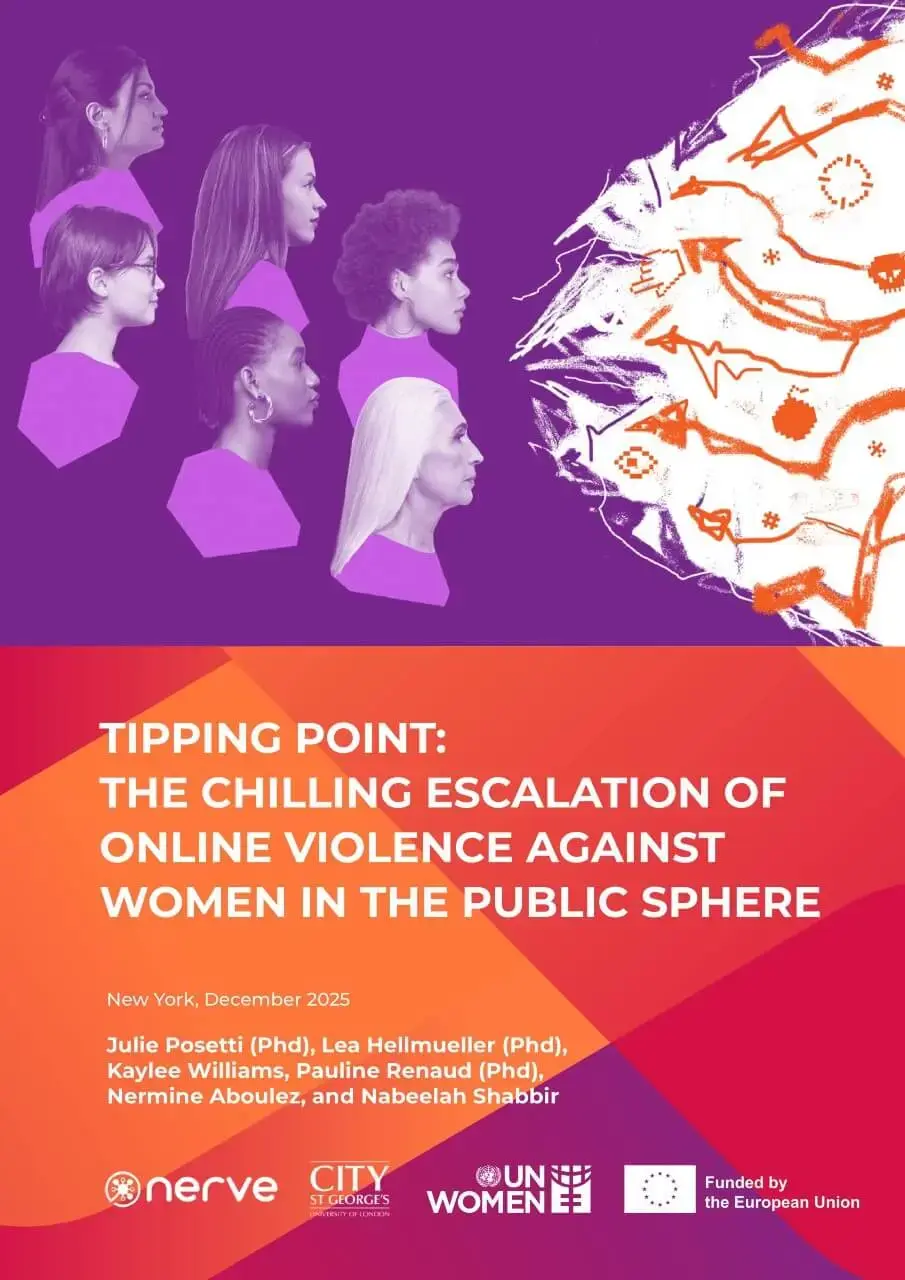
Online violence against women human rights defenders, activists, and journalists has reached a critical level, threatening to exclude women from digital spaces.
According to a 2025 UN Women report, the absence of strong countermeasures also poses a risk to undermining democracy and freedom of expression.
The report presents findings of a survey covering more than 640 women respondents from 119 countries.
Forty-one percent of respondents reported experiencing offline harm — such as physical attacks, stalking, or verbal harassment — which they directly attributed to online abuse.
In the Philippines, recent data from the Center for Media Freedom and Responsibility (CMFR) reveal that 73 percent of women journalists have experienced online violence. Only 10 percent say they have never faced physical intimidation or abuse. More than half (54 percent) report being blackmailed by sources.
Well-known cases involving Nobel Peace Prize laureate Maria Ressa and journalists Ellen Tordesillas, Regine Cabato, Joann Manabat, and Lian Buan illustrate how coordinated online harassment can escalate to legal persecution and physical violence.
These cases have also brought public attention to the dangers of online harassment.
Meanwhile, Amnesty International (AI) Secretary General Agnès Callamard launched the organization’s annual assessment in Manila on April 21, 2026. She warned that the current state of human rights worldwide is a “direct assault” on the foundations of human rights and the international rules-based order.
In its 2025-2026 report on the Philippines, the organization described a troubling year defined by widespread arrests and detentions, including of children, following protests against corruption in flood-control projects.
The report also mentioned the continued use of anti-terrorism laws by government authorities to target development and humanitarian workers, journalists, and activists. At least four journalists were killed during the reporting period, underscoring ongoing threats to press freedom.
The report called attention to the cases of journalist Frenchie Mae Cumpio and development worker Marielle Domequil, both detained for more than five years on fabricated charges; Cumpio and Domequil were convicted of terrorism financing in January 2026.
The Philippines ranks 114th in the 2026 World Press Freedom Index of Reporters Without Borders (RSF). The decline in the security score from 61.57 to 54.03 shows a transition from a more apparent war on media of the previous decade to a more insidious and administrative form of violence imposed on community journalists today.
Despite the change in administration, the state continues to label journalists as terrorists (so-called “red-tagging”). This practice places a target on reporters who face trumped-up charges to silence their coverage of human rights abuses in marginalized sectors.
Philippine political polarisation has led to disinformation flooding the spaces people go to for information, especially social media. Fake accounts spread on social media platforms with false information that then influences online debate.