Joint Statement by European Civil Society Organisations
EU-Philippines Free Trade Agreement: Trade Must Not Be Built on Human Rights Violations
The European Union (EU) is currently negotiating a Free Trade Agreement (FTA) with the Philippines, presenting it as part of a forward‑looking economic partnership and a cornerstone of the EU’s green transition strategy. However, proceeding with these negotiations under the current conditions risks exacerbating human rights violations, land conflicts, and environmental destruction in the Philippines.
European Civil Society Organisations (CSO) express serious concern that the EU’s drive to secure access to critical raw materials and expand market access is increasingly taking precedence over human rights, environmental integrity, climate objectives, the rule of law, and the protection of affected communities.
Entrenched impunity, lack of reform, and ongoing repression
Entrenched impunity and the absence of meaningful legal reform remain at the heart of the Philippines’ human rights crisis. Despite repeated claims of improvement under President Ferdinand Marcos Jr., accountability for past and ongoing abuses remains largely absent. This includes more than 27,000 unresolved extrajudicial killings linked to the so‑called “war on drugs,” continued police violence, and attacks against journalists, community leaders, church workers, trade unionists, lawyers, and human rights defenders. For most victims – particularly in rural and indigenous areas – the justice system remains inaccessible, while perpetrators of human rights violations overwhelmingly enjoy immunity from prosecution.
Nearly a decade after the EU suspended FTA negotiations in 2017 due to serious human rights concerns regarding the killings in the “war on drugs,” the Philippine government has failed to introduce the institutional and legislative reforms necessary to dismantle structures of impunity, guarantee access to justice, and prevent future violations. Instead of strengthening human rights protections, authorities have continued to rely on repressive laws and practices that enable abuse.
Human rights defenders are routinely subjected to threats, surveillance, intimidation, so-called “red-tagging,” criminalisation, and even murder. The practice of “red‑tagging” – which falsely associates individuals or organizations with armed insurgency or terrorism – remains widespread and has repeatedly preceded acts of violence. Counter‑terrorism and public order laws are increasingly used to silence dissent and suppress legitimate advocacy, creating a pervasive climate of fear that undermines the rule of law and fundamentally contradicts the conditions required for rights‑respecting trade.
Mining, critical raw materials, and Indigenous Peoples’ rights
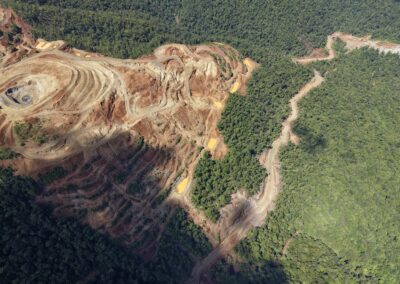
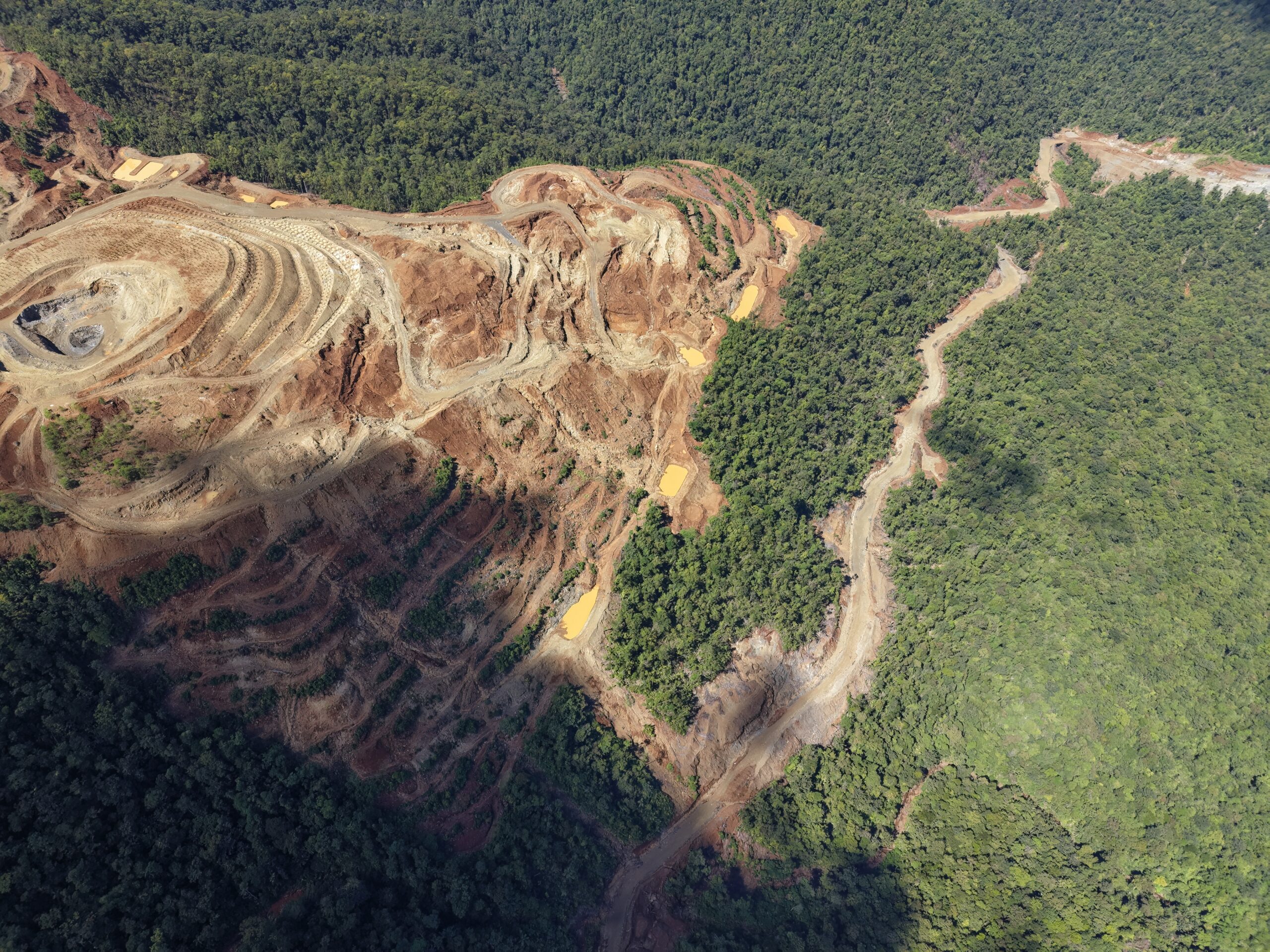
The Philippines holds some of the world’s largest reserves of nickel, cobalt, and copper, making it a strategically important partner for the EU’s raw material supply chains. Around two‑thirds of these mineral deposits are located on the territories of indigenous peoples.
Extensive documentation by Philippine civil society organizations shows that mining projects are already causing loss of livelihoods, food insecurity, deforestation, water contamination, biodiversity loss, displacement of communities, health impacts, and serious human rights violations. The effects of environmental destruction further worsen communities’ vulnerability to climate‑related disasters.
Due to weak governance and entrenched impunity, communities are often not meaningfully consulted, and the Free, Prior, and Informed Consent (FPIC) is frequently violated. Indigenous Peoples’ rights to self‑determination and control over their ancestral lands are systematically undermined, while local authorities and community leaders opposing mining face intimidation, legal harassment, and violence. An EU-Philippines FTA is likely to increase foreign investment in mining in the Philippines, thereby worsening the situation of Indigenous Peoples and local communities and further threatening the climate, biodiversity, forests, and ecosystems already under pressure.
Labour rights, trade unions, and decent work
Serious violations of labour rights and persistently poor working conditions further underscore the risks of proceeding with an EU-Philippines FTA. Workers – particularly in sectors likely to benefit from expanded trade and investment, such as mining, agriculture, manufacturing, and infrastructure – continue to face slavery-like conditions due to low wages, unsafe workplaces, job insecurity, and the widespread use of contractual and precarious employment arrangements.
Independent trade unions report systematic obstacles to freedom of association and collective bargaining, including union‑busting, harassment, dismissal of union organisers, and, in some cases, arrests, surveillance, physical attacks against and even killing labour leaders. The criminalisation of trade union activity and the failure to effectively implement core International Labour Organization (ILO) conventions prevent workers from defending their rights and benefiting equitably from economic growth.
Concluding an EU–Philippines FTA in this context risks entrenching exploitative labour practices and weakening incentives for labour law enforcement, rather than contributing to decent work, social protection, and inclusive development. Without clear, enforceable commitments on labour rights, increased trade risks deepening inequality and exposing workers to heightened abuse.
EU responsibility and policy coherence
The European Commission’s own Sustainability Impact Assessment from 2019 has already identified potential negative human rights impacts of an EU-Philippines FTA, particularly for indigenous peoples, women, and children. Despite significant political, economic, and geopolitical changes, no updated or standalone Human Rights Impact Assessment has been conducted since negotiations resumed.
Experience from other EU trade agreements such as with Vietnam has shown that Trade and Sustainable Development chapters and general human rights clauses are insufficient to prevent human rights violations or to provide remedies for affected communities.
Our demands
Against this backdrop, European CSO call on the European Commission, the Council of the European Union, and the European Parliament to take full responsibility for the human rights, climate, and environmental consequences of this EU trade policy. Continuing negotiations without meaningful, measurable progress on human rights, climate protection, and environmental safeguards is incompatible with the EU’s legal and political commitments under the Treaties and the EU Charter of Fundamental Rights.
Before further rounds of negotiations on the EU-Philippines FTA take place, we call on the EU to:
- Conduct a comprehensive, independent, and standalone Human Rights Impact Assessment.
- Define clear, transparent, and time‑bound human rights and labour rights benchmarks – as preconditions for concluding the negotiations – including the protection of indigenous peoples’ rights, the full implementation of core ILO conventions, effective protection of freedom of association and collective bargaining, an end to “red‑tagging” and the criminalisation of trade unionists and human rights defenders, and effective access to justice.
- Ensure that any future agreement includes robust, enforceable and binding mechanisms, allowing for the suspension of trade benefits in cases of serious and systematic violations of human rights, labour rights, climate and environmental commitments, rather than relying solely on dialogue‑based commitments.
- Integrate labour and human rights, climate, and environmental measures into all parts of the agreement, ensuring that these critical considerations are addressed across trade, investment, and all other relevant provisions.
- Establish coherence with labour and human rights obligations, the Green Deal, the EUDR (Deforestation Regulation), the CSDDD (Corporate Sustainability Due Diligence Directive), CBAM (Carbon Border Adjustment Mechanism) and sectoral policies.
At the same time, the EU should continue to press the Philippine government to take concrete steps to address impunity and align domestic legislation with international human rights standards, including reforms related to extractive industries, counter‑terrorism laws, and the protection of human rights defenders.
A matter of credibility
The EU faces a clear political choice. It can align its trade policy with its stated values, legal obligations, and climate and environmental commitments — or it can proceed with an agreement that risks entrenching repression, dispossession, biodiversity loss, deforestation, and environmental destruction in the name of economic and strategic interests, especially for export-oriented corporations.
Concluding an EU-Philippines free trade agreement under the current conditions would severely undermine the EU’s credibility as a global actor on human rights, climate action, and environmental protection, while setting a dangerous precedent for future trade negotiations. Trade policy must never come at the expense of human rights, the livelihoods of Indigenous Peoples and local communities, the climate, biodiversity, or forests.
Unless there is meaningful, measurable progress on human rights, environmental protection, and climate safeguards, the EU must halt negotiations and refrain from concluding or ratifying the agreement.
Signatories
- 11.11.11
- ACV-CSC
- Aktionsbündnis Menschenrechte-Philippinen (AMP)
- CNCD-11.11.11
- Dreikönigsaktion der Katholischen Jungschar
- Ecologistas en Acción
- European Coordination Via Campesina
- European Trade Justice Coalition
- Franciscans International
- Friends of the Earth Europe
- German NGO Forum on Environment & Development
- Global Witness
- International Action for Peace – IAP Catalunya
- International Coalition for Human Rights in the Philippines (ICHRP) – Germany
- Misereor
- Philippinenbuero e.V.
- PowerShift e.V.
- Transnational Institute
- United Evangelical Mission
- WEED e.V.
- We Social Movements (WSM)
Download (PDF): EU CSO Joint Statement | EU-Philippines Free Trade Agreement: Trade Must Not Be Built on Human Rights Violations (Engl.)
Photo © Erwin Mascariñas/Global Witness