
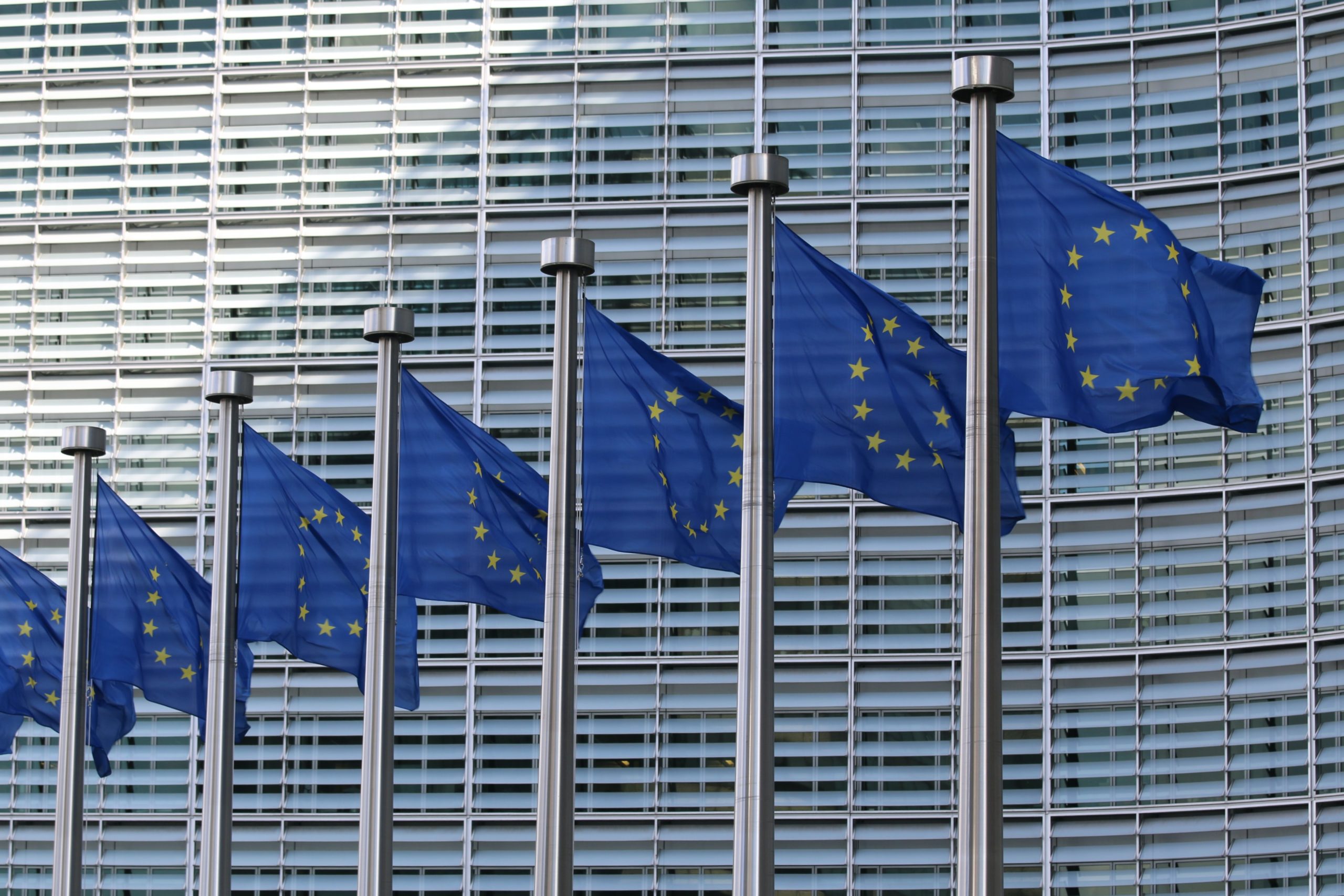
Lawmakers in the Philippines are calling on the government to strengthen workers’ rights amid ongoing negotiations for the European Union-Philippines Free Trade Agreement (EU-PH FTA), warning that delays in passing long-pending labor reforms could jeopardize the trade deal. The labor group Trade Justice Pilipinas (TJP) also urges the EU to halt FTA negotiations until measurable improvements are made in workers’ rights, forced labor enforcement, and the implementation of a genuine industrial strategy that generates decent employment.
The appeals came after meetings between EU parliamentarians from the International Trade Committee (INTA) and Philippine labor groups, including the Trade Union Congress of the Philippines (TUCP) and TJP, on the EU‑PH FTA negotiations.
Seven INTA members visited the Philippines from February 16-18, 2026 to assess the situation of the FTA negotiations. They met with trade and finance officials, legislators, businesses, and civil society groups to discuss opportunities, challenges, and concerns regarding the proposed agreement.
Strengthening workers’ rights is both a labor concern and an essential economic strategy for securing the EU-PH FTA, said TUCP Party-list Representative and House Deputy Speaker Raymond Mendoza in a statement.
Mendoza noted that amid ongoing challenges with corruption and governance, protecting labor rights demonstrates to the international community that the Philippines is prepared for fair trade, decent employment, and sustainable investment. He urged Congress and the administration to accelerate reforms to align Philippine labor laws with international standards, adding that failure to do so could cost the country billions of euros in trade and investments and hundreds of thousands of jobs.
Several labor and civil society organizations who are part of TJP have expressed strong reservations on the trade deal and urged the European delegation not to endorse the agreement, which they view as “based on exploitation.”
Josua Mata, Secretary General of the labor group SENTRO, warned that previous trade liberalization initiatives have failed to benefit Filipino workers. He noted that new agreements mainly favor a small elite, leaving wages stagnant and inequality growing. Mata argued that without major structural reforms, the proposed FTA would reinforce an unfair economic system.
SENTRO also stressed that fundamental labor rights such as freedom of association, collective bargaining, and protection from forced labor continue to be regularly violated.
Other TJP members raised concerns about human rights and the shrinking of civic space in the Philippines under Marcos Jr.’s government. Despite a general decline in violence, threats to human rights defenders, particularly environmental activists, are still reported, and peasant organizing continue to be criminalized, resulting in the incarceration of numerous activists.
In the 2025 Global Witness Report, the Philippines remains in the list of countries that are dangerous for human rights defenders, specifically for environmental activists.
INTA Chair Bernd Lange, who led the delegation mission, described the Philippines as an important ally in the EU’s Indo-Pacific strategy, supporting shared principles such as territorial sovereignty and rule-based international order. Lange also referred to the commitments to uphold international labor and environmental standards included in the Trade and Sustainability (TSD) chapter of the agreement.
The Aktionsbündnis Menschenrechte-Philippinen (AMP), however, explains in a briefing note that in the event of a breach of the obligations in the TSD chapter, the agreement provides only for consultations. This mechanism, as stated by the AMP, is considered ineffective as it cannot lead to trade sanctions. The AMP further concludes that the „current FTA-negotiation text offers little scope for responding to human rights violations and imposing effective sanctions.”
EU-Philippines free trade negotiations started in December 2015, with the first round held in May 2016, but were suspended in 2017 due to the human rights crisis under the Rodrigo Duterte administration. The talks resumed in March 2024 under President Ferdinand Marcos Jr. and are ongoing, with the sixth negotiation round set for May 2026.
Following the fifth FTA negotiation round from March 2 to 6, 2026 in Brussels, Cristina Roque, Secretary of the Department of Trade and Industry (DTI), expressed certainty to conclude the deal by June or July 2026 already.
Since 2025, the EU seems to rush the conclusion of free trade deals with different countries and regions, including India, Mexico, Indonesia, Mercosur, Thailand, Malaysia, and the Philippines.
Photo © Guillaume Périgois on Unsplash